At the age of 23, Jack Taylor developed sepsis in September 2023 after what appeared to be a minor football injury to his foot. Within days of developing flu-like symptoms, he deteriorated rapidly, suffering organ failure and requiring multiple surgeries and intensive care treatment.
After weeks in hospital, Jack was told he might never play football again or pursue his dream career. Now recovered, and aged 25, he has returned to the sport he loves and is working as a police officer – and is sharing his story to highlight how quickly sepsis can develop and why early action matters.
On 9 September 2023, Jack was playing in a competitive football match when he was injured.
“Someone’s boot stud went into the roof of my foot,” he said.
Although the injury didn’t break the skin, his foot swelled significantly. Assuming it was a typical sports injury, he treated it with ice and carried on.
For over a week, nothing seemed out of the ordinary. Then, on 18 September, he began to feel unwell.
“I began having flu-like symptoms. I could not keep any food down,” Jack said. “I was freezing cold but sweating as if I’d been in a sauna.”
Over the next few days, his condition worsened. He experienced extreme shivering, muscle pain, breathlessness and stopped passing urine. By the morning of 22 September, he woke unable to feel his right leg.
“My parents carried me to the car and took me to hospital,” he said. “That’s when my nightmare truly began.”
After blood tests, Jack was admitted to an infectious diseases ward, isolated behind glass while doctors tried to identify the cause. His foot was drained and tested, revealing a rare form of sepsis linked to a Fusobacterium infection.
Within 24 hours, his condition became critical.
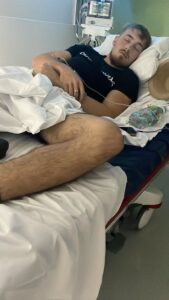
“I had an overwhelming sensation of dying,” he said. “I could not see tomorrow.”
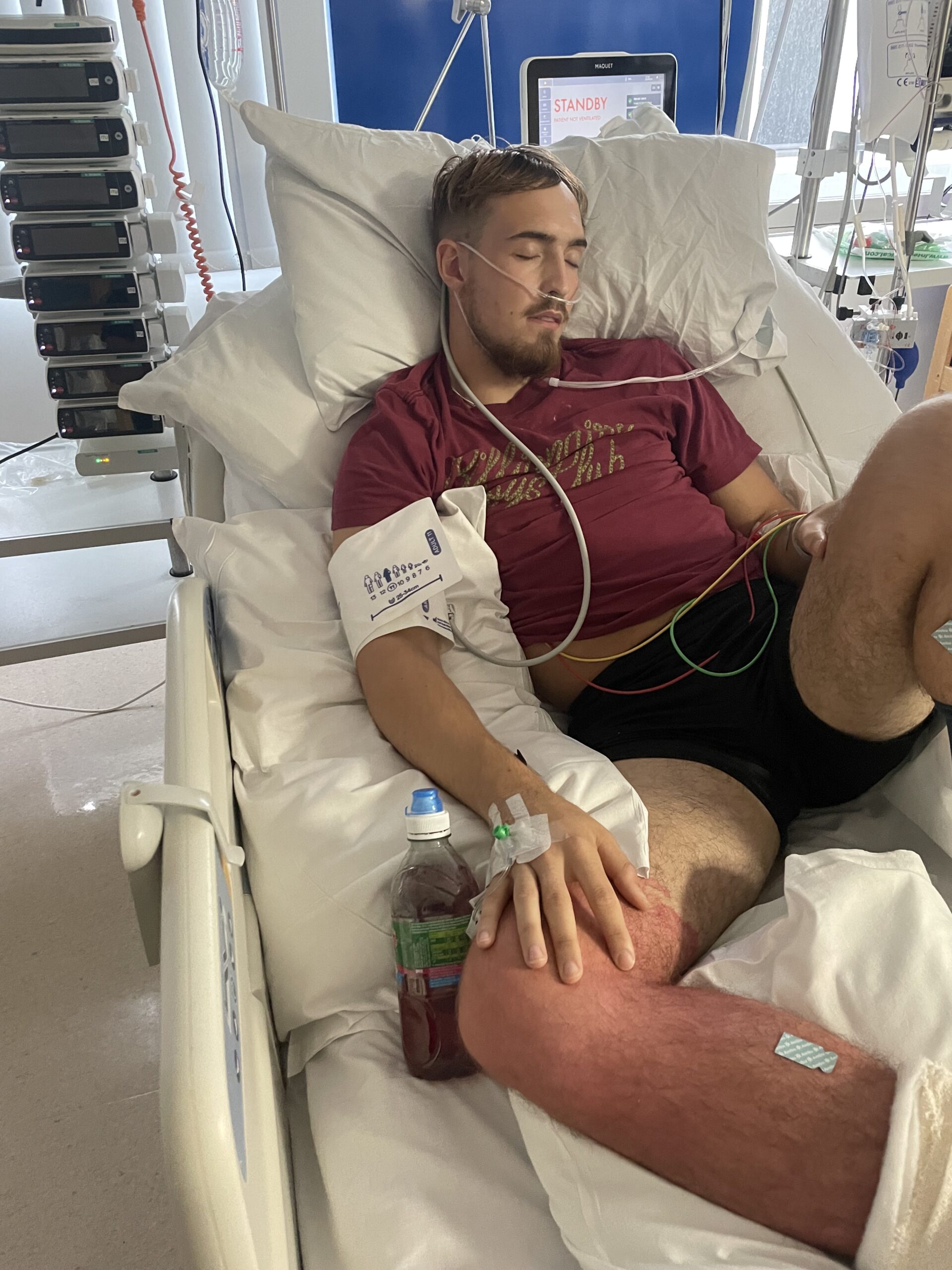
Jack was transferred to intensive care, where he underwent emergency surgery to wash out the infection in his foot and ankle. Although initially thought to be improving, his infection markers remained dangerously high.
Further surgery followed, but his condition continued to deteriorate: “My lungs had started to collapse, my liver was failing and I started to feel that there was no hope.”
“My parents sat beside my bed crying not knowing if I was going to live or die,” Jack added. “It was the first time I’d ever seen my dad cry so I knew it wasn’t good.”
Friends visited to say what he believed might be their final goodbyes.
“I thought it was going to be my last day on this planet,” he said.
Jack remained in intensive care, heavily medicated and largely unaware of what was happening around him. He required frequent blood tests via an arterial line and ongoing treatment to stabilise his organs.
After his time in ICU, he was transferred to a recovery ward, where the long process of rehabilitation began. By this point, he had been bedbound for two weeks and was unable to bear weight.
Physiotherapy proved both physically and emotionally challenging.
“I couldn’t do it,” he said. “I felt worthless.”
Simple, everyday tasks became overwhelming, and the loss of independence hit hard.
“At 23 years old, never did I think my mother was going to wash me,” he said. “I felt as low as a man could feel.”
Gradually, he began to improve. On 6 October, he was given the news he had been hoping for.
“‘Mr Taylor, how would you like to go home’,” he recalled. “I cried, I sobbed.”
Jack was discharged with a PICC line in place, allowing him to continue receiving treatment at home from community nurses. Leaving hospital was an emotional moment after weeks of critical illness.
“I felt wind on my face for the first time in what felt like forever,” he said.
Recovery, however, was far from straightforward. Regaining the ability to walk took time, patience and determination.
Jack had been told he might never play football again, and that his dream of becoming a police officer was no longer possible. Refusing to accept that outcome, he focused on rebuilding his strength step by step.
“After my experience with sepsis, I will never ever take life for granted,” he said.
Today, Jack has returned to playing football – at a non-competitive level – and is now working in his dream role as a police officer.
Reflecting on his experience, he says he knew nothing about sepsis beforehand.
“Nothing, never ever heard of it,” he said. “Now, I see the posters everywhere.”
If he could go back, he would have acted sooner: “I would tell myself to get my injury checked out earlier. It could’ve saved me a world of pain.”
He is deeply grateful to the healthcare professionals who treated him.
“The surgeons and doctors saved my life,” he said. “I will forever be in debt.”
Jack’s recovery has also been shaped by personal loss. His mother, who supported him throughout his illness, died of cancer just four months after he left hospital.
Despite everything, he remains focused on the future – and on appreciating the small things in life.
“The gratefulness of life and what it has to offer,” he said. “I never knew how hard it would be to even use the toilet.”
By sharing his story, Jack hopes others will recognise the seriousness of sepsis and act quickly when something doesn’t feel right.