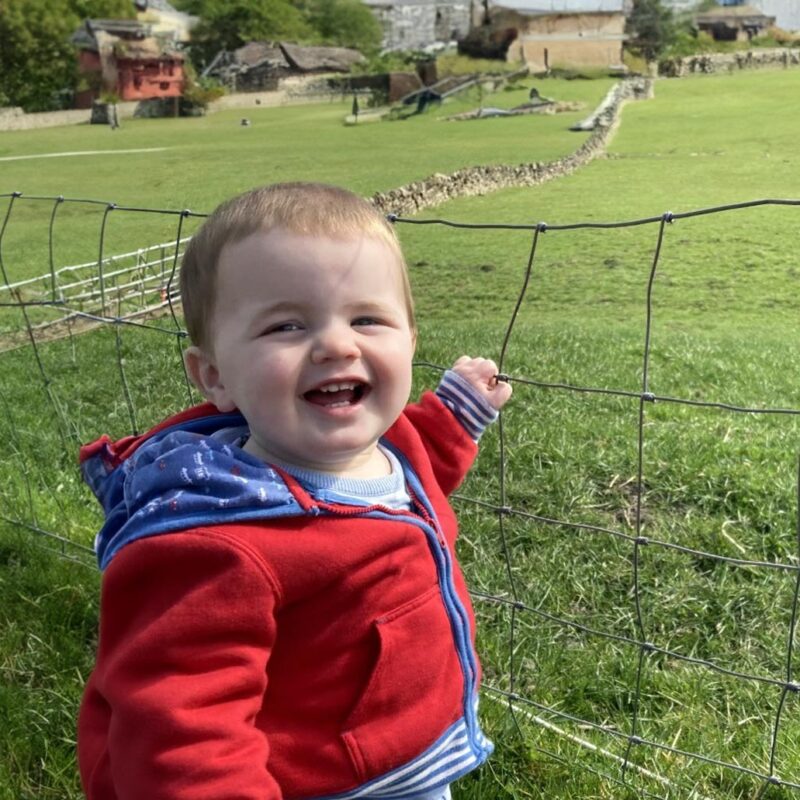

Harriet Beveridge, a working mum of two teenage boys from Bath, thought her 17-year-old son Tom had picked up a nasty virus circulating at school. Within days, what began as a cold-like illness progressed to life-threatening sepsis caused by Covid-19 and streptococcal pneumonia.
Tom’s breathing became dangerously fast and shallow, his skin turned a “crazy grey”, and his body began to shut down. Swift recognition at a local walk-in clinic and urgent hospital treatment saved his life. Now recovered, Harriet is urging parents to recognise when illness stops being “normal” and to trust their gut.
Tom, a fit rugby and hockey player applying to study medicine at university, had initially seemed to have a low-level infection.
“He had a bit of a cold,” Harriet recalled. “Covid-19 was going round the school. He wanted to go back in.”
Harriet describes their family as health-aware but not medically trained: “I think I’d put us in the category of reasonably clued up. We know about exercise, we know about mental health. But in terms of medical stuff, I’d say we’re of the generation of ‘man up, cupcake’.”
After a below-par rugby match, Tom was grumpy but well enough to enjoy dinner with family friends. Around midnight on Saturday, he appeared at Harriet’s bedroom door – something he never did – saying he felt ill.
He began vomiting and couldn’t keep fluids down. On Monday, Harriet phoned a medical helpline and was advised to keep him hydrated. By Tuesday, he appeared to turn a corner.
“He was snoozing in front of the telly and looked quite peaceful,” she said. “We thought he was on the road to recovery.”
At 2am, Tom told her he couldn’t settle or sleep.
“That’s the moment that haunts me,” Harriet said. “I sat with him because he was distressed. This was very unusual behaviour for him. I looked at him and I knew he was dehydrated.”
He complained of back pain, which they attributed to coughing. As he drifted off, Harriet noticed his breathing.
“It was super fast and super shallow,” she said. “He was expelling two to three breaths per second.”
In hindsight, she knows that was the moment they should have gone straight to hospital. The following morning, she decided to take him to the local walk-in clinic instead. Tom struggled to get downstairs and had to lean on her to reach the car parked outside their home.
One of the doctors on duty was also a school mum.
“She said that even if she hadn’t known Tom, she would have said that was a seriously ill child,”
Harriet recalled. “She was brilliant; very straightforward, very clear.”
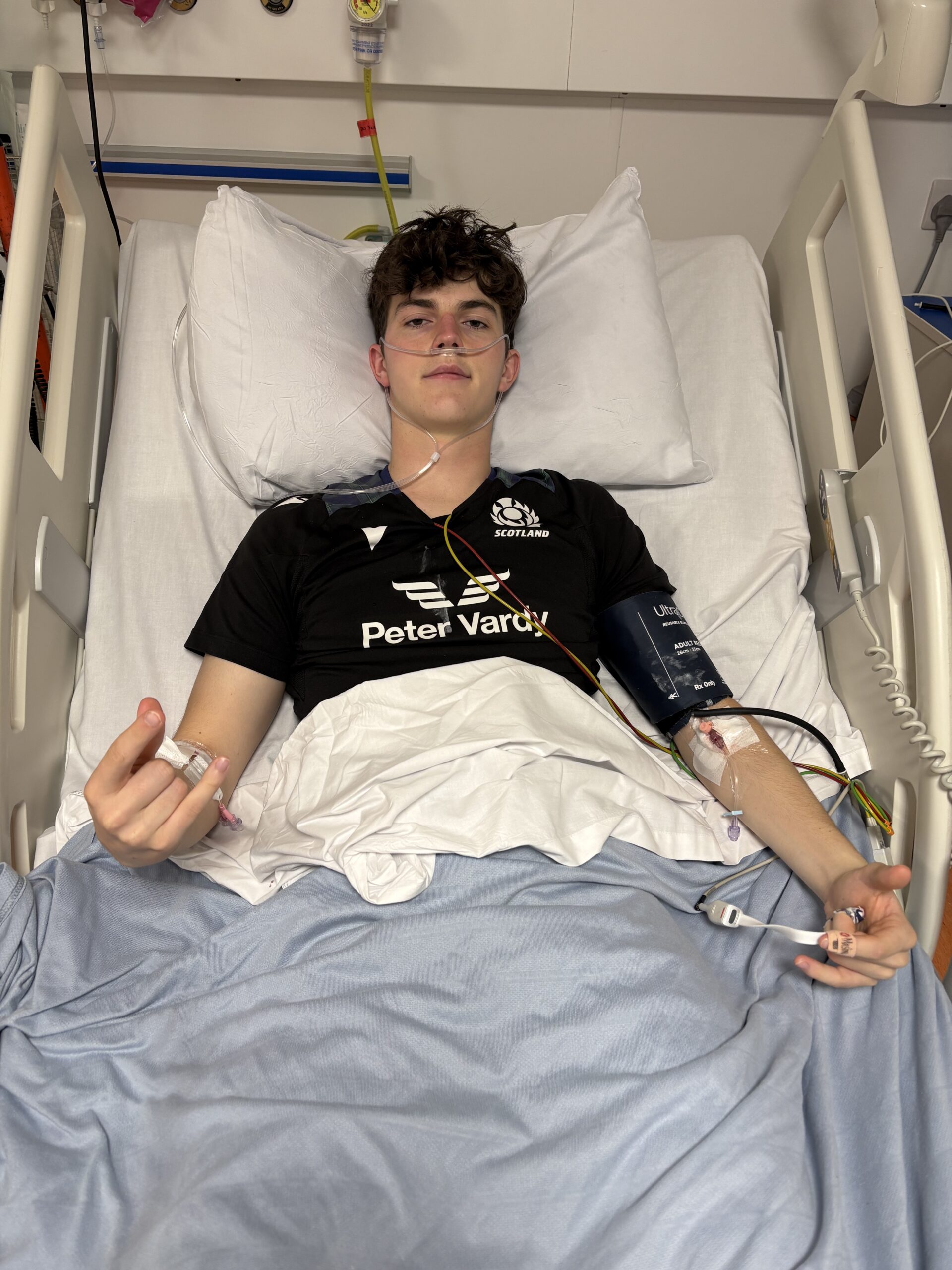
The doctor phoned ahead to the hospital, expediting his admission to the paediatric unit, where a team of medics were waiting. Tom’s CRP level was 431. A healthy reading would be less than 5. He was immediately given IV antibiotics and fluids.
It later emerged that Tom had Covid-19, which developed into streptococcus pneumonia – a bacterial lung infection that entered his bloodstream, triggering sepsis.
“We were incredibly, incredibly lucky,” Harriet said. “I don’t like to think about how many hours it would have taken before we were flirting with limb loss. Even a few hours different, it could be a very, very different story.”
Tom spent five days in high dependency and required a further week of returning to hospital for intravenous antibiotics. Logistically, it was difficult, with Harriet and her husband both self-employed. They managed hospital visits in shifts.
In terms of emotional coping strategies, they found they had different approaches.
“Sometimes you want to tell the story in the full nine yards, and sometimes you don’t,” Harriet said.
She coped by socialising, while her husband was more reserved. They also worried about how their other son was processing the reality that “his brother could’ve died.”
Throughout the illness, Tom had been stoic.
“He’s not a fusser, he wants to be well,” Harriet said. “But his version of normal was completely compromised.”
When he was unwell, Tom’s skin had turned a “crazy grey”. He was severely breathless and struggling to get words out. He had muscle pain they assumed was from coughing and had a fluctuating temperature. But because the deterioration was gradual, neither of them fully grasped the severity and sepsis had never crossed Harriet’s mind.
“I’d seen it written on ambulances,” she said. “But that’s for old people. That’s for other people. Not for a rugby-playing fit young man.”
She had heard about sepsis during the Covid pandemic but didn’t realise it wasn’t a single symptom or condition.
“I couldn’t have told you what the signs are. I knew the name. I knew it was serious. But I didn’t know what it was,” she said.
Her GP later described sepsis as “Swiss cheese”, where there isn’t just one hole, but multiple small things adding up.
“Now, if I was looking at a child at two o’clock in the morning, I’d go: dehydrated, ill for a while, unusual behaviour, shallow breathing – right, it’s time to take action,” Harriet said.
Tom has since bounced back “remarkably well”.
Although the GP warned it could take six months for physical, cognitive and emotional recovery, he is now representing his school for hockey and cricket and has returned to competitive matches.
Harriet admits she is now “a bit more helicoptery” as a parent because of the experience.
If she could go back, Harriet says she would be “way more on it.”
“I know the NHS is overloaded, I didn’t want to make an unnecessary fuss, but now I’d know: go in as soon as you are concerned. Trust your gut. You know your child best.”