In March 2022, Ben, a healthy and active 36-year-old father of two, became critically ill with life-threatening sepsis – just weeks after undergoing two abdominal operations.
Despite showing clear symptoms, Ben was initially sent home from A&E. Within days, his condition deteriorated rapidly. He was rushed back to hospital, admitted to intensive care, and placed into a medically induced coma on a ventilator. His wife, Sarah, feared the worst. “I instinctively knew something was very wrong,” she said.
Ben had been recovering at home after a scheduled hernia operation on 6th March, only a month after having an emergency appendectomy. But by 9th March, he began to feel unwell – his temperature soared, he started shaking violently, and his skin turned a mottled grey. On 17th March, Sarah used a home oximeter to check his vitals – his resting heart rate, normally around 55, had shot up to 140. “He was delirious, and I was scared,” Sarah said.
At A&E, Sarah told staff she believed her husband had sepsis. Despite her concerns and his obvious symptoms, Ben was sent home. “I felt terrified, out of control and helpless,” said Sarah.
By the 19th March, his fevers had persisted and Sarah’s alarm deepened. While she was out with their daughters – 5 and 3 – Ben sent her a text message: “I have chills, they’re multiplying.”
Unsure if it was humour or delirium, Sarah headed home at once and took him straight back to A&E. She remembers taking a photo of him slumped in a corridor chair with a drip in his arm – the last time she would see him for three days due to Covid restrictions.
Ben was admitted and transferred to acute medical care, but Sarah was repeatedly told she could not visit. “I have a photo of that door preventing me from seeing him,” she said. “It was hard, but nothing compared to what came next.”
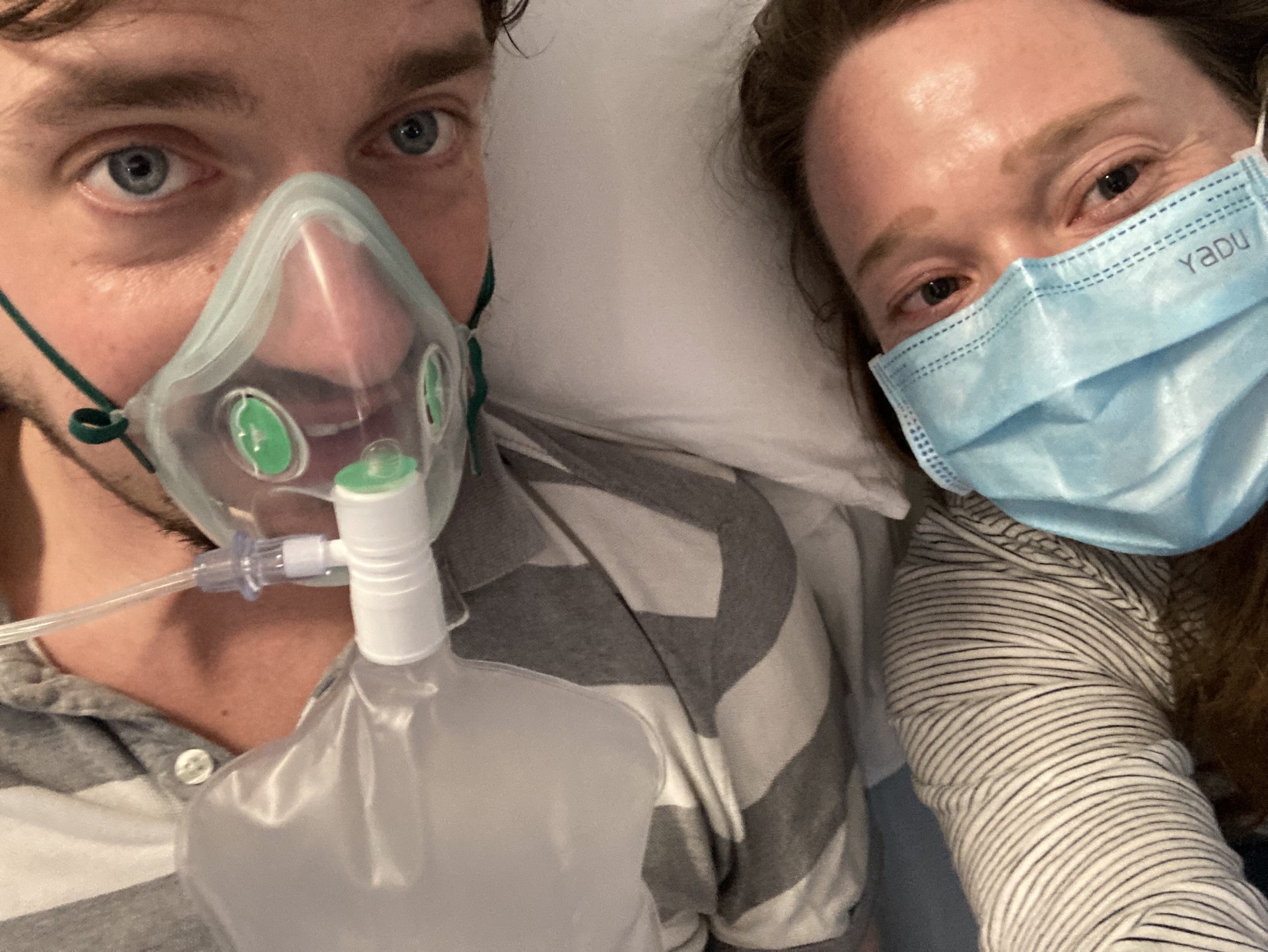
On 22nd March, Ben’s breathing began to fail. He was placed on a nasal oxygen tube and flagged for possible transfer to intensive care. That evening, he FaceTimed Sarah to say he was about to be put into a coma and ventilated. “We said our goodbyes, in a way. I reassured him he would wake up. He told me he’d sent me an email – it was a goodbye email. It was earth-shattering,” she said.
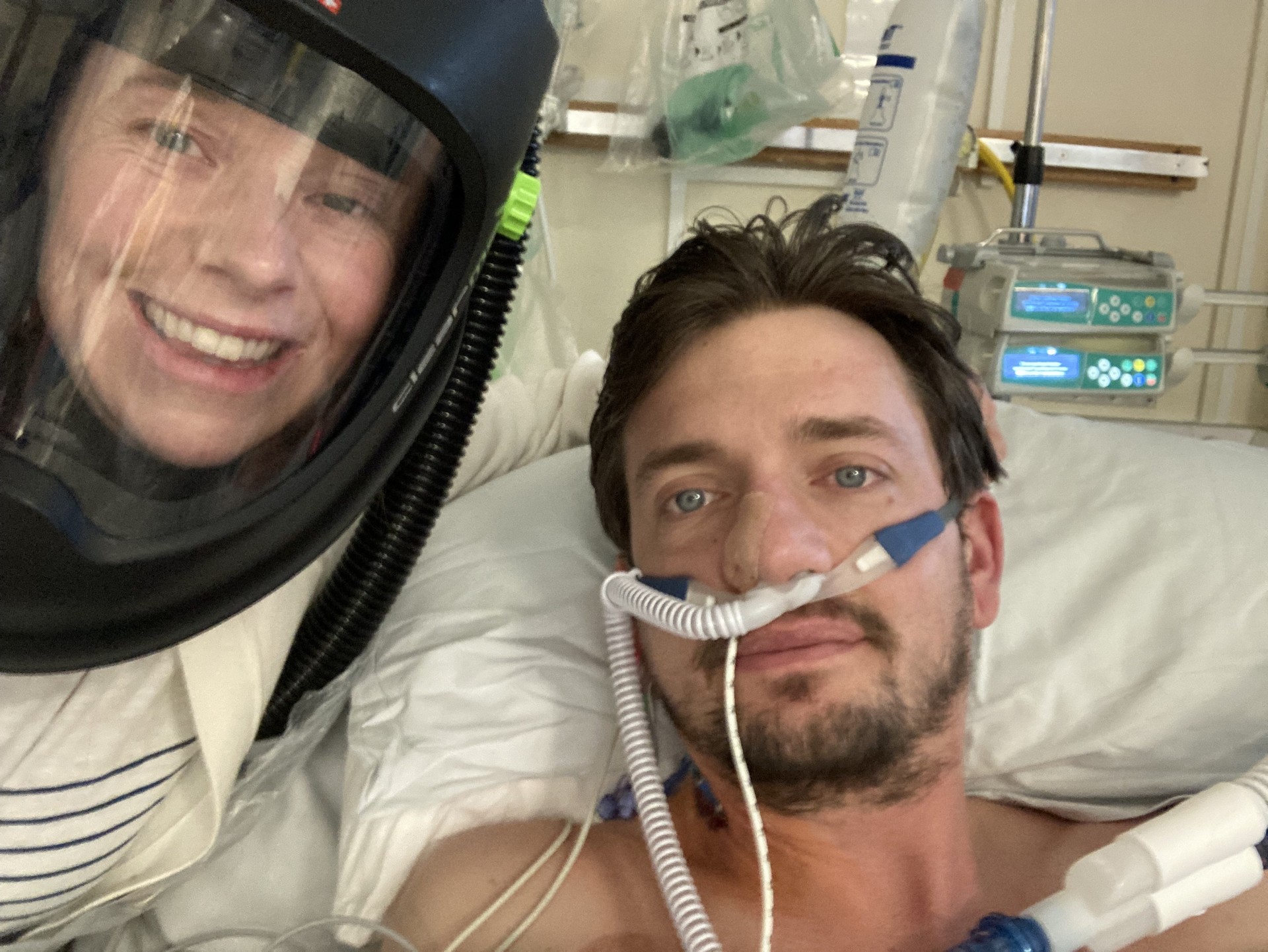
Overnight, Ben rallied. The next morning, still ventilated, he managed to send her a selfie captioned ‘so sexy’. Smiling, Sarah said: “I’ll blame the drugs.”
But his condition remained critical. His temperature peaked at 43.8°C, requiring a cooling device called the Arctic Sun. At one point, his blood pressure dropped to dangerously low levels.
During one of Sarah’s many late-night calls to check if he was still alive, a nurse finally mentioned sepsis, confirming what she had suspected all along.
Sarah’s message to healthcare professionals is clear: “Listen to loved ones. I said the first time that’s what I thought it was. He got terrifyingly close to dying – so do the proper checks.”
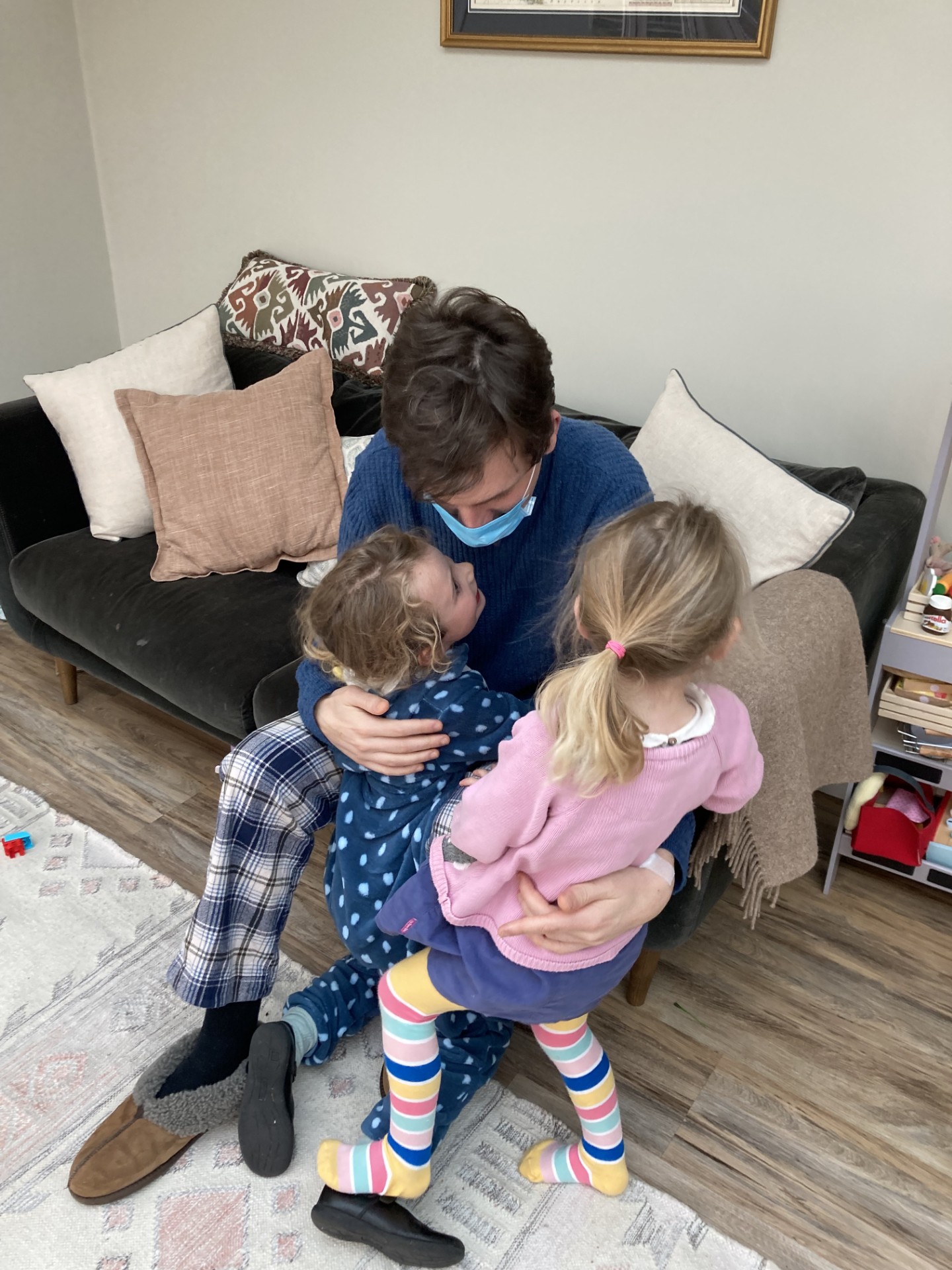
After six days on assisted breathing, Ben came off the ventilator on 28th March. The following day, he was discharged home directly from intensive care to be reunited with his young girls who had not seen him, apart from a couple of video calls, for over two weeks.
“We were elated but terrified to suddenly be responsible for his care,” Sarah said. Although his oxygen levels still dipped and his fever lingered, a GP confirmed he was out of immediate danger.
Ben survived, with fortunately no lasting health issues – but the experience left lasting scars on the whole family.
“He got terrifyingly close to dying,” Sarah said.
Now she hopes sharing their story will raise awareness. “Even young, fit and healthy people can get sepsis,” she said. “Trust your instincts. If you think something is wrong, go to A&E. It could save a life.”