
Seven-year-old Bernie Massey was rushed to hospital with life-threatening sepsis after what initially appeared to be a routine chest infection. Within hours of being sent home with antibiotics, his condition deteriorated rapidly, leaving him unresponsive and struggling to breathe.
His mum, Amreen, believes awareness from the UK Sepsis Trust helped her recognise the warning signs and act quickly – a decision that may well have saved his life.
On the morning of Friday 30 January 2026 Bernie woke up and went to school as usual. Earlier that week, he had developed a slight cough, which gradually worsened, but nothing initially caused alarm.
Two hours after dropping him off, Amreen received a call from the school.
“They told me my son was shivering and sitting indoors with his coat on,” she said.
She collected him immediately and arranged a GP appointment. Bernie was seen within the hour and diagnosed with a chest infection.
“The GP described it as a ‘crackly chest’ and prescribed antibiotics,” Amreen said.
Back at home, Bernie rested on the sofa while Amreen monitored him closely. It was then that his condition began to change.
“I noticed a grunting noise when he was breathing,” she said. “His breathing became rapid, and I could see his ribs pulling in with each breath.”
His temperature rose to 40°C, and he became increasingly lethargic before becoming unresponsive.
Amreen contacted the GP again and was told to wait for a callback. At the same time, she searched his symptoms online.
“By this point, Bernie was completely unresponsive, and I had to carry him to the car,” she said.
The information she found on UKST’s ‘About Sepsis’ webpage made clear that urgent action was needed.
“When we arrived at A&E, he was floppy, unresponsive and unable to stand,” she said.
At Lincoln County Hospital, the seriousness of Bernie’s condition was immediately recognised, and staff acted quickly.
“The receptionist recognised how serious his condition was and immediately alerted medical staff,” Amreen said.
Bernie was taken straight to resuscitation, where the sepsis protocol was initiated. He was given intravenous fluids and antibiotics, and a chest X-ray confirmed pneumonia.
As the team rushed to treat him, Amreen realised just how critical the situation had become.
“As the team rushed to help us, I knew something was extremely wrong,” she said.
Bernie responded to treatment, and the infection was brought under control.
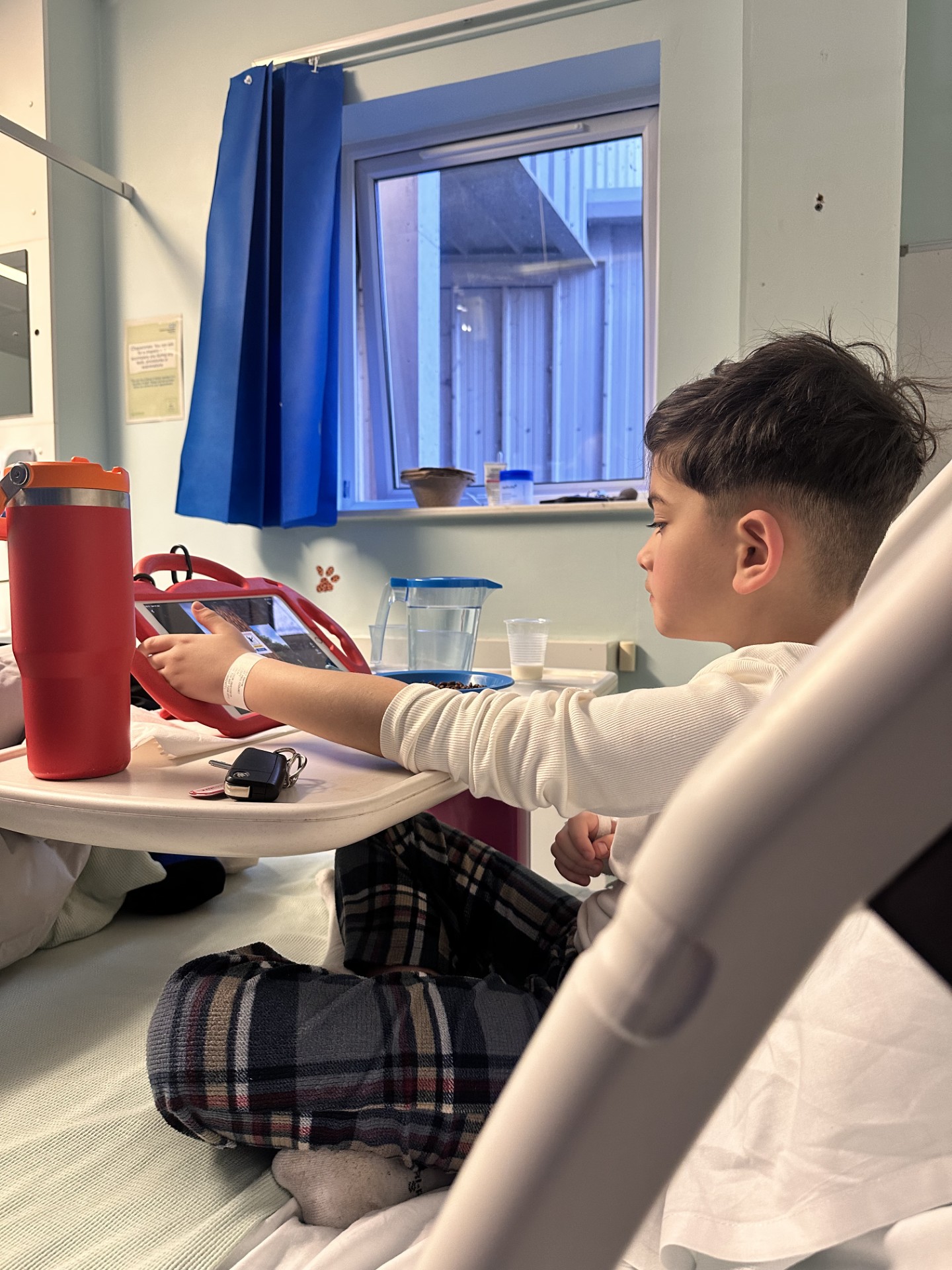
Thankfully sepsis protocol was followed and Bernie spent four days in hospital.
Amreen said: “We had to cancel his birthday party which he was looking forward to that weekend. No aftercare was offered but I did my own research and Bernie was able to go home with strong antibiotics. I felt comfortable knowing what signs and symptoms to look out for.”
Reflecting on the experience, Amreen believes that our charity’s work made a vital difference.

“Had I not seen the work of the UK Sepsis Trust, I wouldn’t have known what signs to look for,” she said. “It may have saved my son’s life.”
She describes the experience as deeply traumatic but is full of gratitude for the care her son received.
“Every member of staff treated him with kindness, reassurance, and exceptional care,” she said. “Their compassion and professionalism made a very difficult time more bearable for both of us.”
Now, Amreen is sharing Bernie’s story to help other parents recognise the signs of sepsis and act quickly.
For her, the message is simple: awareness matters – and in Bernie’s case, it made all the difference.
Learn the signs of sepsis today – get #SepsisSavvy